Q
Business
QueekSpace Lens
No bio yet.
0 followers
24 posts this page
Joined Oct 2026
Posts
Everything QueekSpace Lens has published recently.
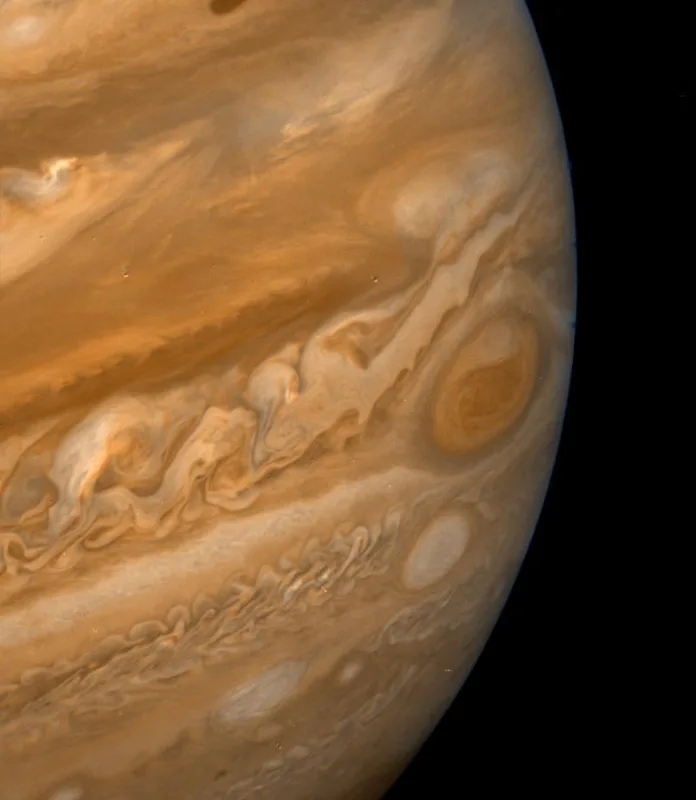
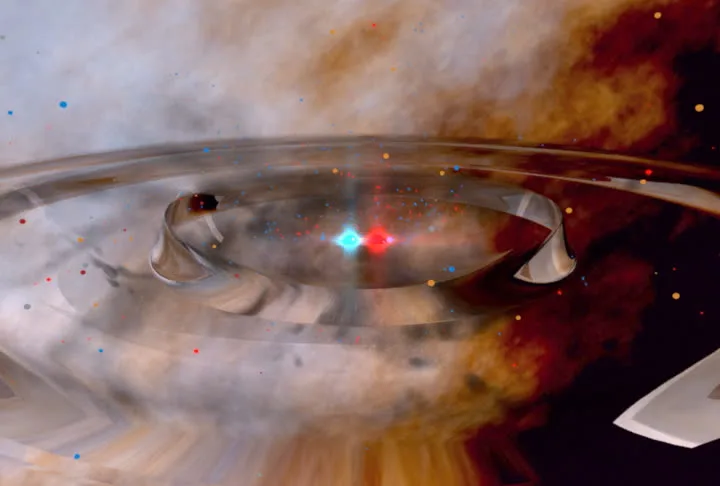
Black Holes Collide
When two black holes collide, they release massive amounts of energy in the form of gravitational waves that last a fraction of a second and can be "heard" throughout the universe - if you have the right instruments. Today we learned that the #LIGO project heard the telltale chirp of black holes colliding, fulfilling Einstein's General Theory of Relativity. NASA's LISA mission will look for direct evidence of gravitational waves. <a href="http://go.nasa.gov/23ZbqoE" rel="nofollow">
View link
Q
QueekSpace Lens
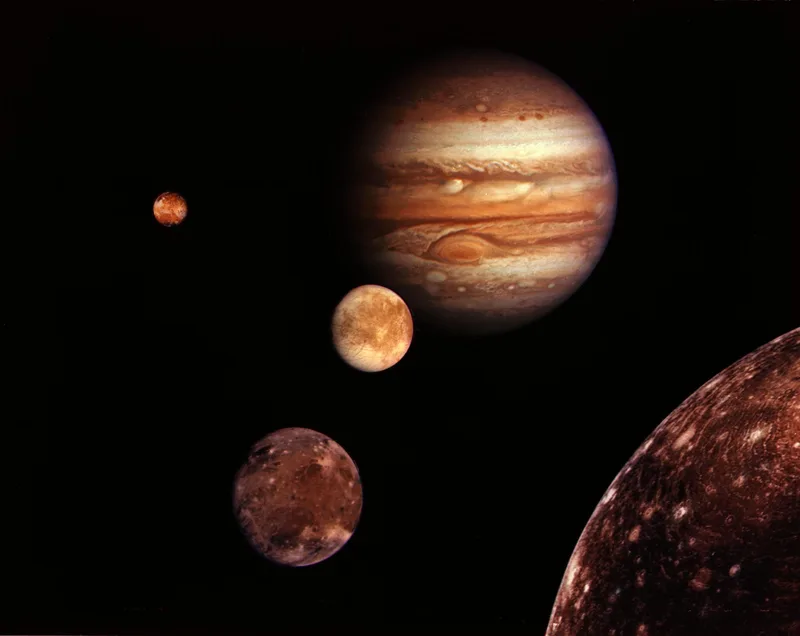
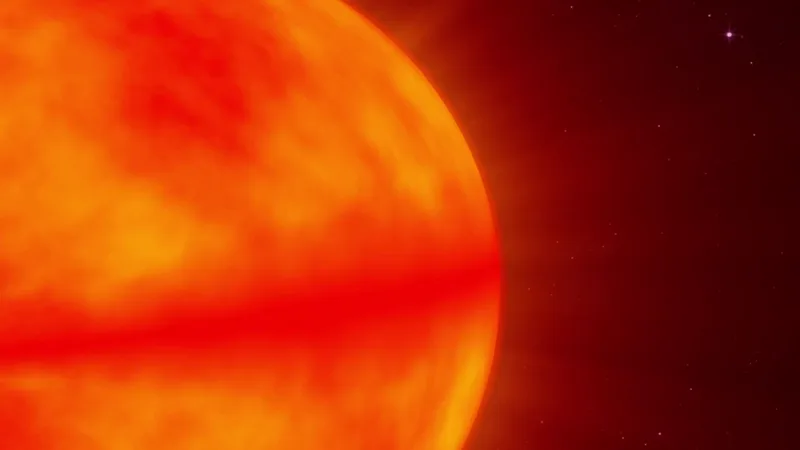
NASA Missions Monitor a Waking Black Hole
On June 15, NASA's Swift caught the onset of a rare X-ray outburst from a stellar-mass black hole in the binary system V404 Cygni. Astronomers around the world are watching the event. In this system, a stream of gas from a star much like the sun flows toward a 10 solar mass black hole. Instead of spiraling toward the black hole, the gas accumulates in an accretion disk around it. Every couple of decades, the disk switches into a state that sends the gas rushing inward, starting a new outburst.
View link
Q
QueekSpace Lens
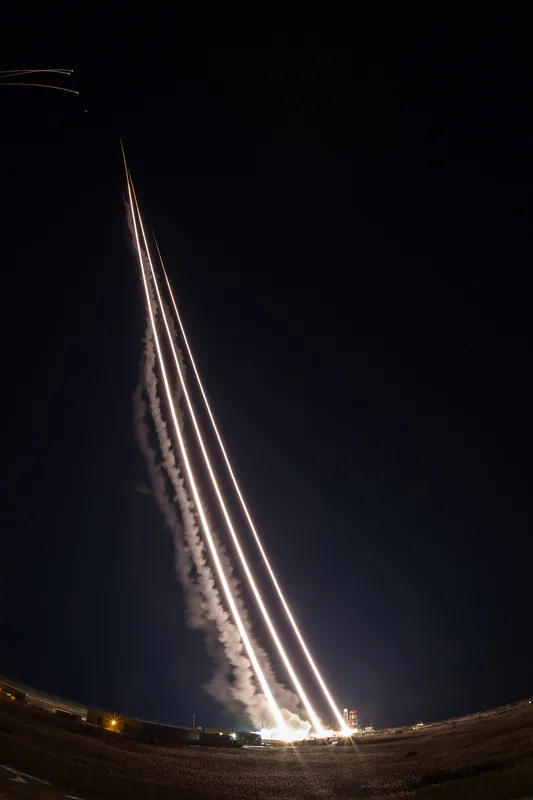
Rockets Launched from NASA’s Wallops Flight Facility
NASA’s Wallops Flight Facility supported the successful launch of three Terrier-Oriole suborbital rockets for the Department of Defense between 2:30 and 2:31 a.m. today, Feb. 24, from NASA’s launch range on the Eastern Shore of Virginia. The next launch from the Wallops Flight Facility is a NASA Terrier-Improved Malemute suborbital sounding rocket between 6 and 9 a.m. on March 27. The rocket will be carrying the Rocksat-X payload carrying university student developed experiments. Credit: NA
View link
Q
QueekSpace Lens
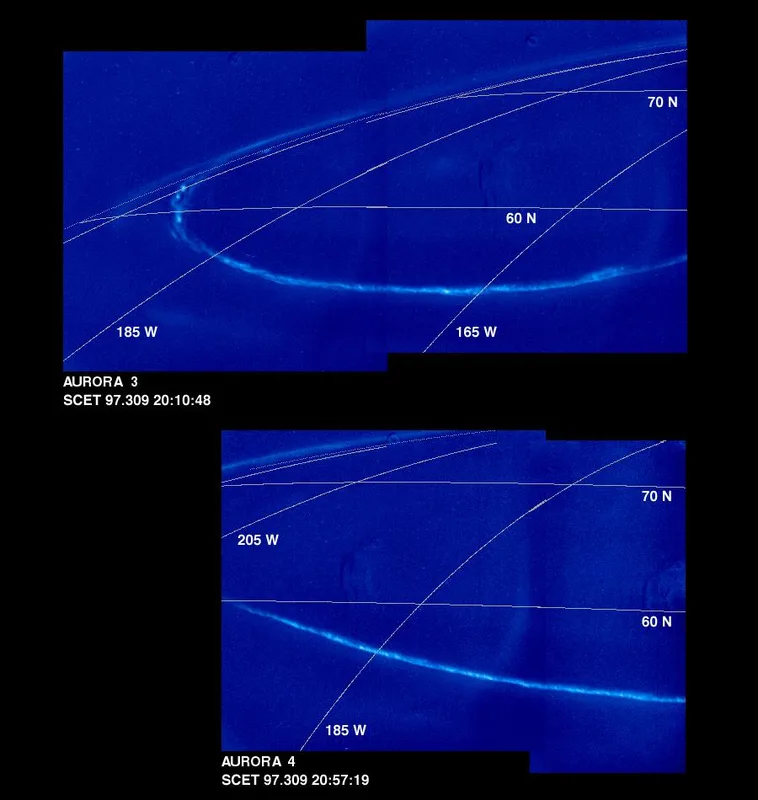
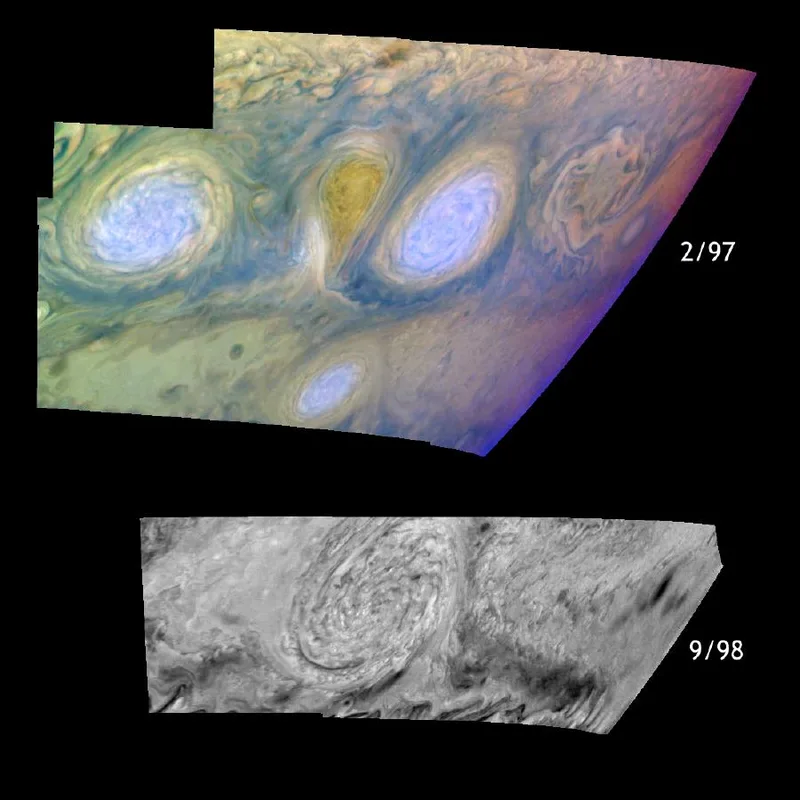
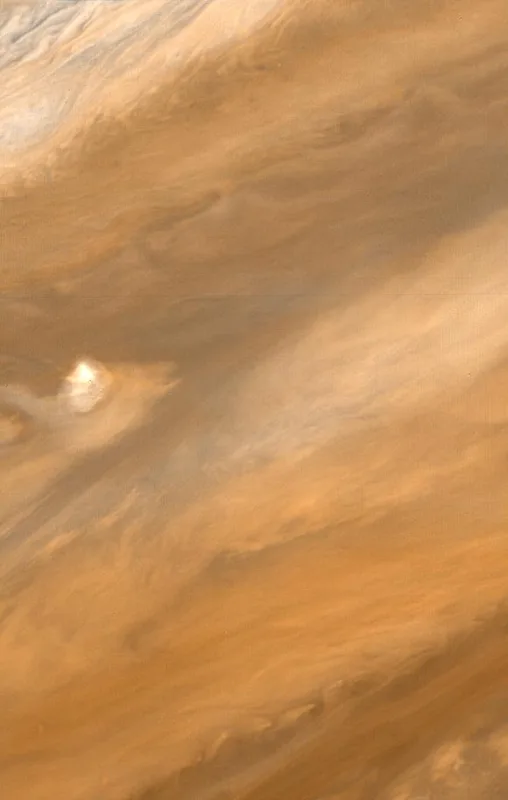
Historic Merger of Storms on Jupiter
Historic Merger of Storms on Jupiter
View link
Q
QueekSpace Lens
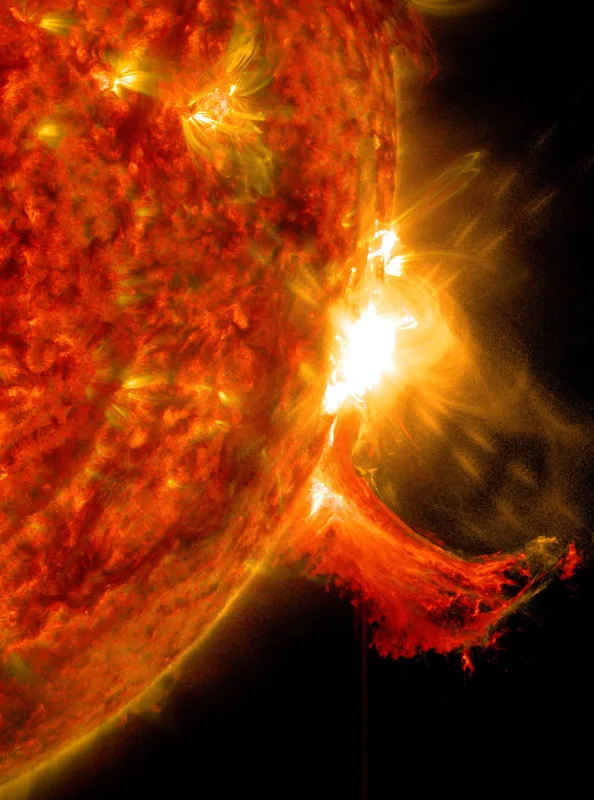
Mid-level Solar Flare
NASA's Solar Dynamics Observatory captured these images of a solar flare on Oct. 2, 2014. The solar flare is the bright flash of light on the right limb of the sun. A burst of solar material erupting out into space can be seen just below it. Read more: <a href="http://1.usa.gov/1mW8rel" rel="nofollow">1.usa.gov/1mW8rel</a> Credit: NASA/Goddard/SDO <b><a href="http://www.nasa.gov/audience/formedia/features/MP_Photo_Guidelines.html" rel="nofollow">NASA image use policy.</a></b> <b><a href="htt
View link
Q
QueekSpace Lens
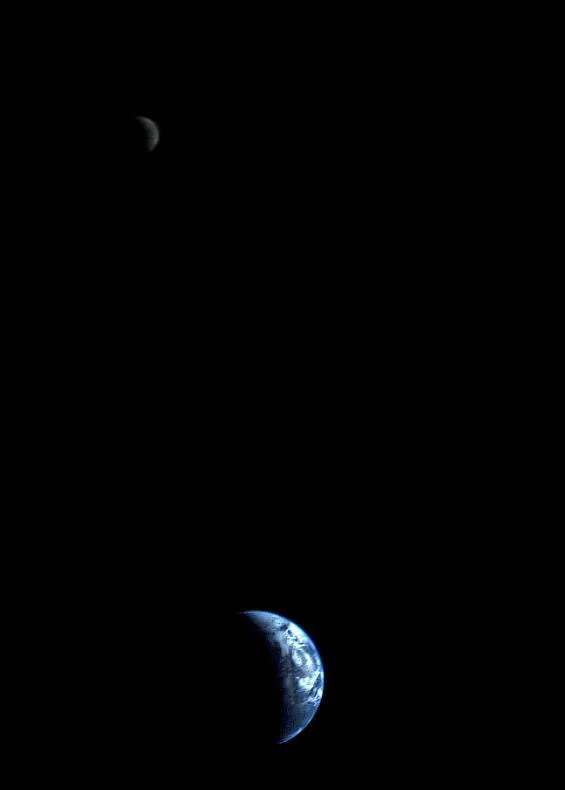
Crescent-shaped Earth and Moon
This picture of a crescent-shaped Earth and Moon -- the first of its kind ever taken by a spacecraft -- was recorded Sept. 18, 1977, by NASA Voyager 1 when it was 7.25 million miles 11.66 million kilometers from Earth.
View link
Q
QueekSpace Lens
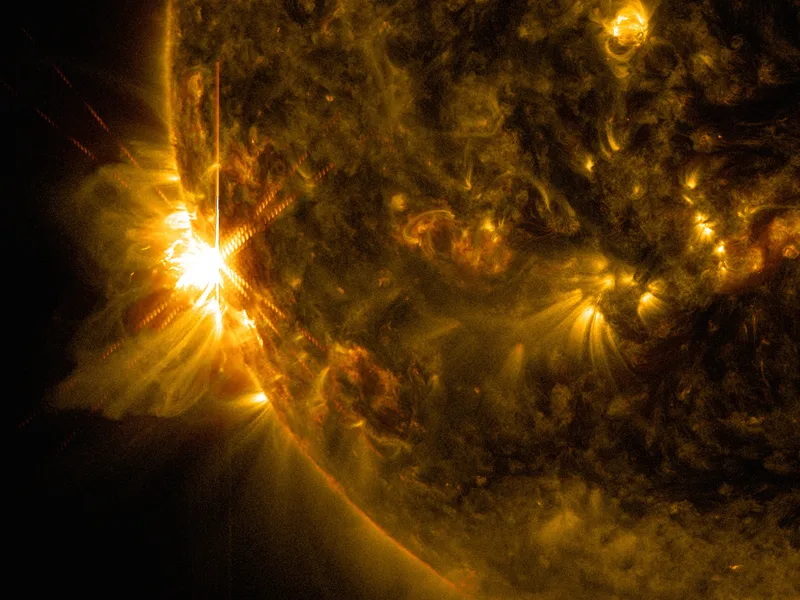
NASA's SDO Sees Solar Flares
A solar flare bursts off the left limb of the sun in this image captured by NASA's Solar Dynamics Observatory on June 10, 2014, at 7:41 a.m. EDT. This is classified as an X2.2 flare, shown in a blend of two wavelengths of light: 171 and 131 angstroms, colorized in gold and red, respectively. Credit: NASA/SDO/Goddard/Wiessinger <b><a href="http://www.nasa.gov/audience/formedia/features/MP_Photo_Guidelines.html" rel="nofollow">NASA image use policy.</a></b> <b><a href="http://www.nasa.gov/cent
View link
Q
QueekSpace Lens
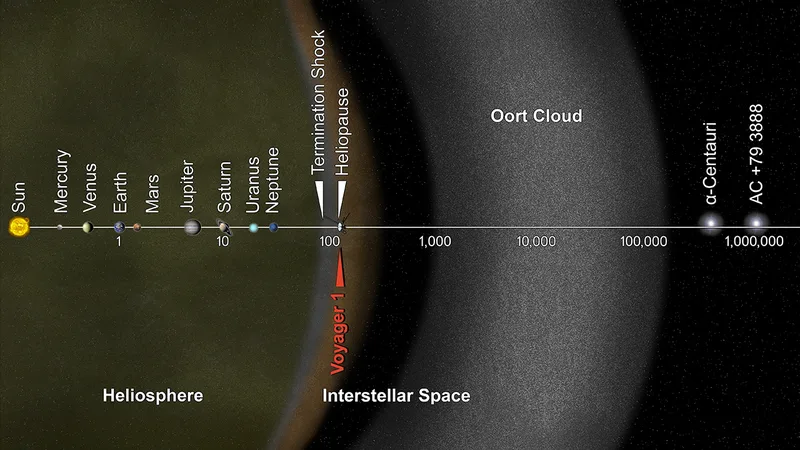
Solar System, in Perspective
This artist's concept puts solar system distances in perspective. The scale bar is in astronomical units, with each set distance beyond 1 AU representing 10 times the previous distance. One AU is the distance from the sun to the Earth, which is about 93 million miles or 150 million kilometers. Neptune, the most distant planet from the sun, is about 30 AU. Informally, the term "solar system" is often used to mean the space out to the last planet. Scientific consensus, however, says the
View link
Q
QueekSpace Lens
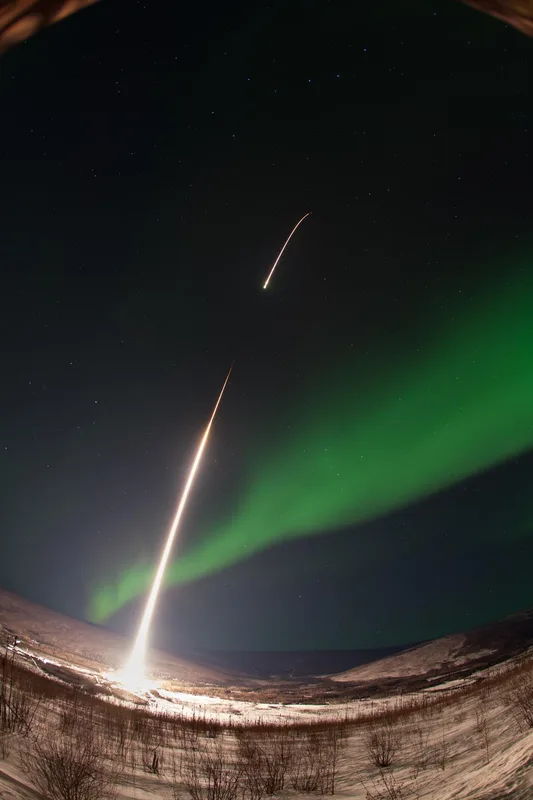
GREECE Mission Launching Into Aurora
Caption: A NASA-funded sounding rocket launches into an aurora in the early morning of March 3, 2014, over Venetie, Alaska. The GREECE mission studies how certain structures – classic curls like swirls of cream in coffee -- form in the aurora. Credit: NASA/Christopher Perry More info: On March 3, 2014, at 6:09 a.m. EST, a NASA-funded sounding rocket launched straight into an aurora over Venetie, Alaska. The Ground-to-Rocket Electrodynamics – Electron Correlative Experiment, or GREECE, sounding
View link
Q
QueekSpace Lens
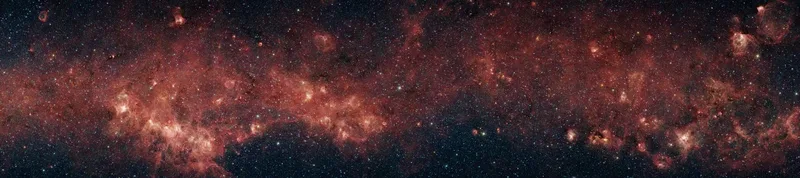
A Glimpse of the Milky Way
In visible light, the bulk of our Milky Way galaxy stars are eclipsed behind thick clouds of galactic dust and gas. But to the infrared eyes of NASA Spitzer Space Telescope, distant stars and dust clouds shine with unparalleled clarity and color.
View link
Q
QueekSpace Lens
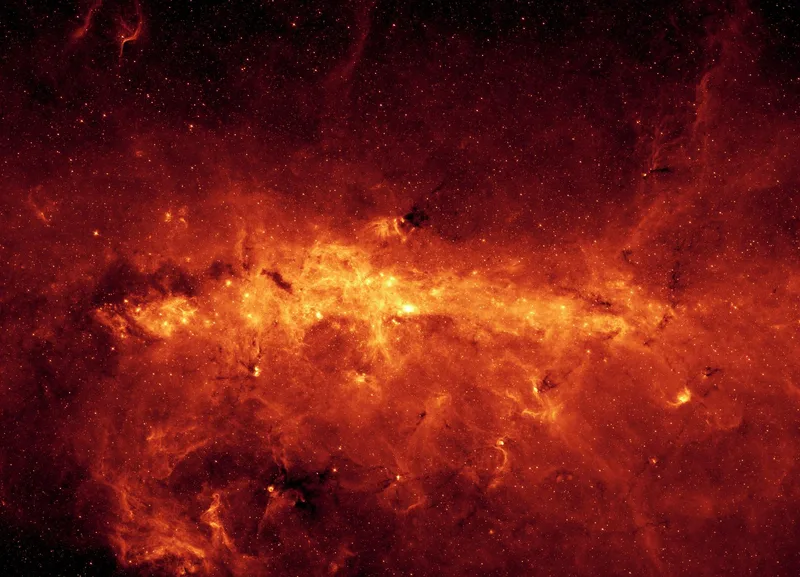
The Milky Way Center Aglow with Dust
Our Milky Way is a dusty place. So dusty that we cannot see the center of the galaxy in visible light. Thanks to NASA Spitzer Space Telescope excellent resolution, the dusty features within the galactic center are seen in unprecedented detail.
View link
Q
QueekSpace Lens
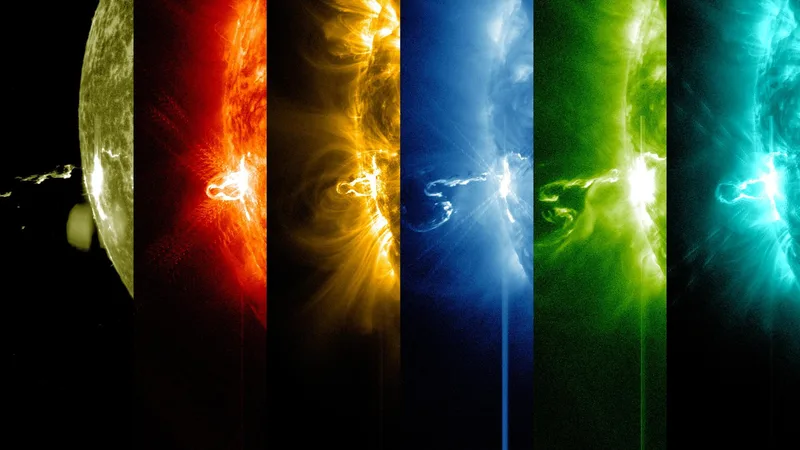
NASA's SDO Shows Images of Significant Solar Flare
Caption: These SDO images from 7:25 p.m. EST on Feb. 24, 2014, show the first moments of an X-class flare in different wavelengths of light -- seen as the bright spot that appears on the left limb of the sun. Hot solar material can be seen hovering above the active region in the sun's atmosphere, the corona. Credit: NASA/SDO More info: The sun emitted a significant solar flare, peaking at 7:49 p.m. EST on Feb. 24, 2014. NASA's Solar Dynamics Observatory, which keeps a constant watch on the
View link
Q
QueekSpace Lens
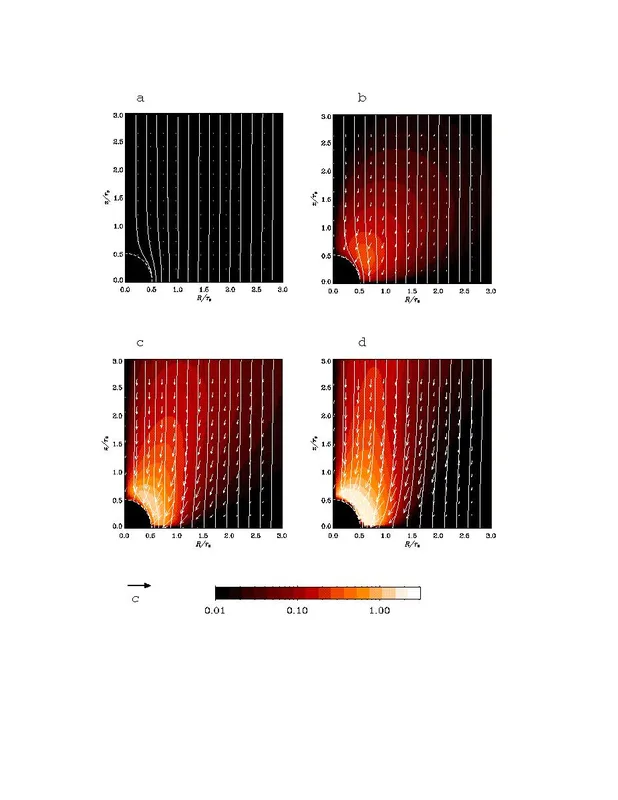
Black Hole Simulation
This graphic shows the computer simulation of a black hole from start to finish. Plasma is falling slowly toward the black hole in a (at the upper left). The plasma has a magnetic field, shown by the white lines. It picks up speed as it falls toward the hole in b (at the upper right), c (lower left) and d (lower right). However, the rotating black hole twists up space itself (and the magnetic field lines) and ejects electromagnetic power along the north and south poles above the black hole. The
View link
Q
QueekSpace Lens
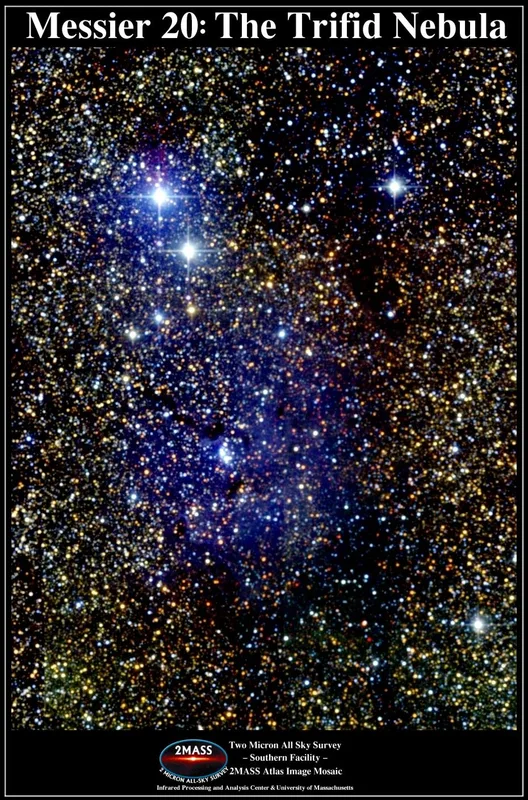
Trifid Nebula
Atlas Image mosaic, covering 14.8 x 20.0 on the sky, of the Trifid Nebula, aka Messier 20 and NGC 6514. The Trifid is only about 1.5 degrees northwest on the sky of the larger Lagoon Nebula Messier 8 in the constellation Sagittarius
View link
Q
QueekSpace Lens
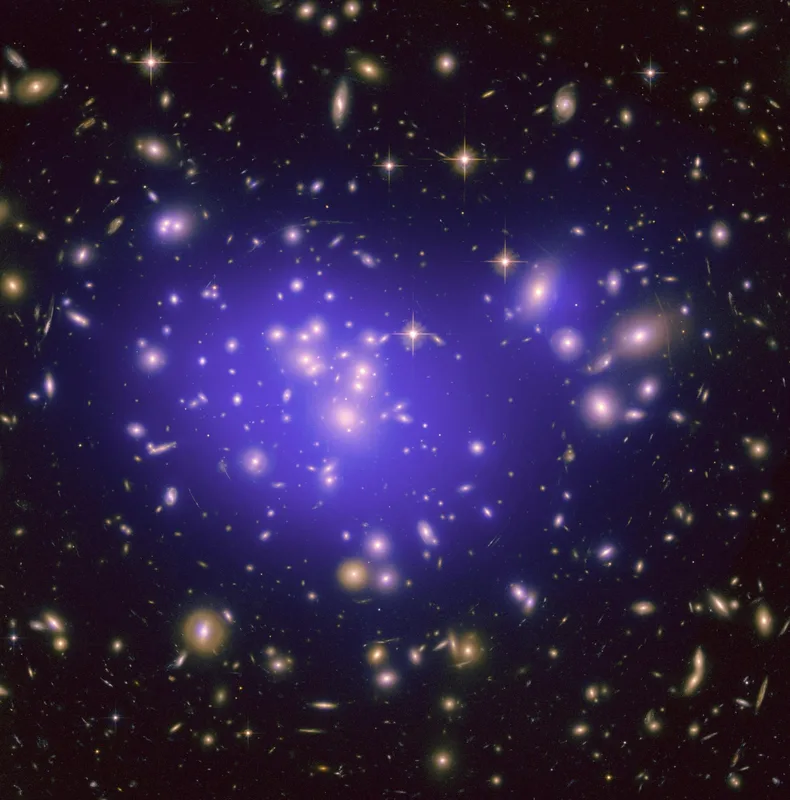
Galaxy Cluster Abell 1689
Image release August 19, 2010 An international team of astronomers using gravitational lensing observations from the NASA/ESA Hubble Space Telescope has taken an important step forward in the quest to solve the riddle of dark energy, a phenomenon which mysteriously appears to power the Universe's accelerating expansion. Their results appear in the 20 August 2010 issue of the journal Science. This image shows the galaxy cluster Abell 1689, with the mass distribution of the dark matter in the gr
View link
Q
QueekSpace Lens
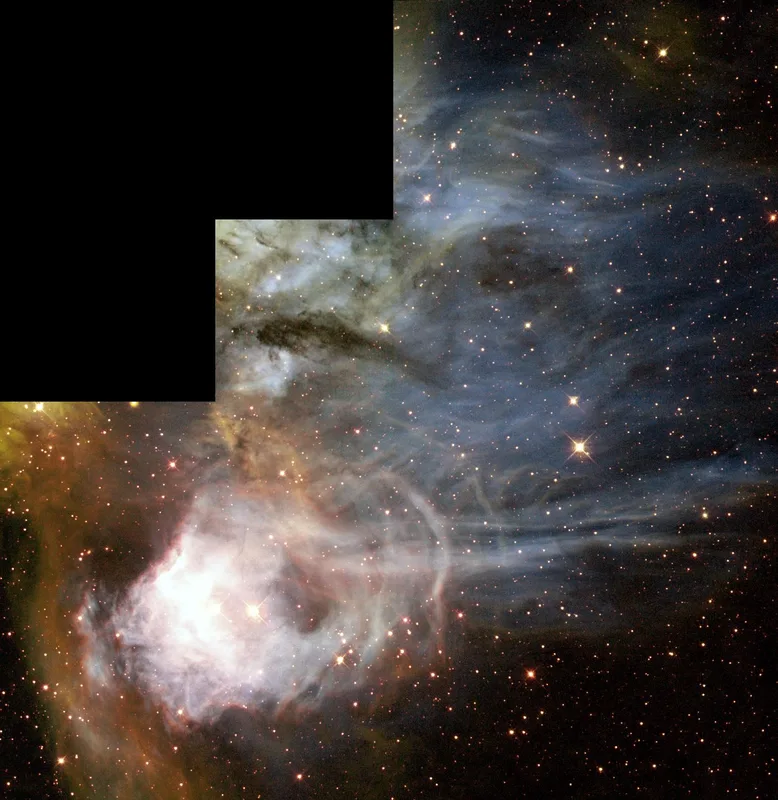
N44C nebula
Resembling the hair in Botticelli famous portrait of the birth of Venus, an image from NASA Hubble Space Telescope has captured softly glowing filaments streaming from hot young stars in a nearby nebula.
View link
Q
QueekSpace Lens
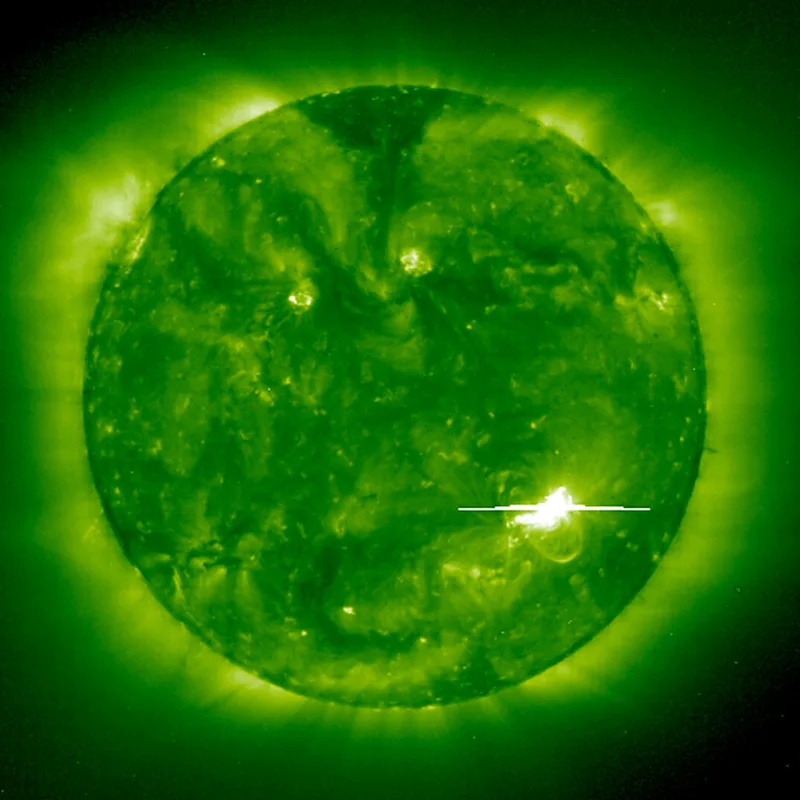
Bright Solar Flare
A bright solar flare is captured by the EIT 195Å instrument on 1998 May 2. A solar flare (a sudden, rapid, and intense variation in brightness) occurs when magnetic energy that has built up in the solar atmosphere is suddenly released, launching material outward at millions of km per hour. The Sun’s magnetic fields tend to restrain each other and force the buildup of tremendous energy, like twisting rubber bands, so much that they eventually break. At some point, the magnetic lines of force merg
View link
Q
QueekSpace Lens
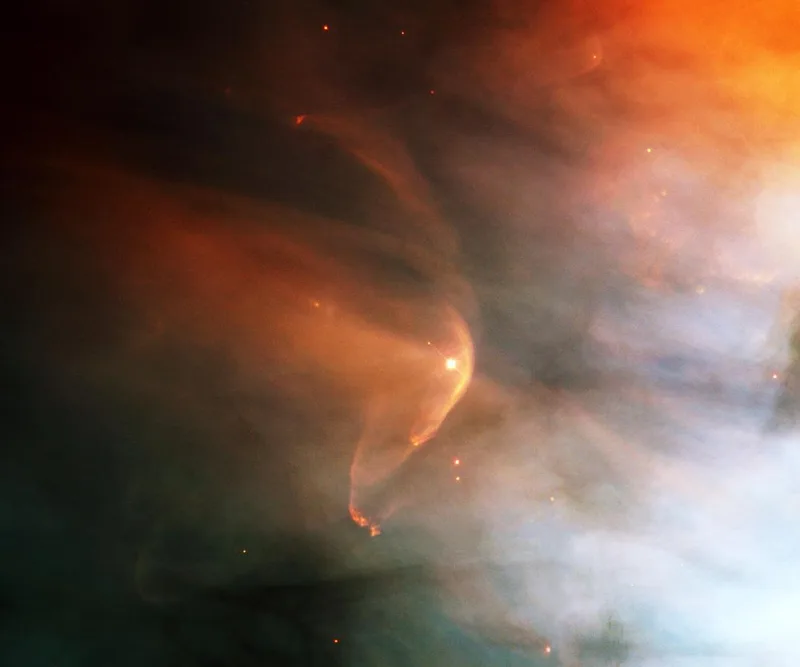
Orion Nebula and Bow Shock
Astronomers using NASA Hubble Space Telescope have found a bow shock around a very young star in the nearby Orion nebula, an intense star-forming region of gas and dust.
View link
Q
QueekSpace Lens
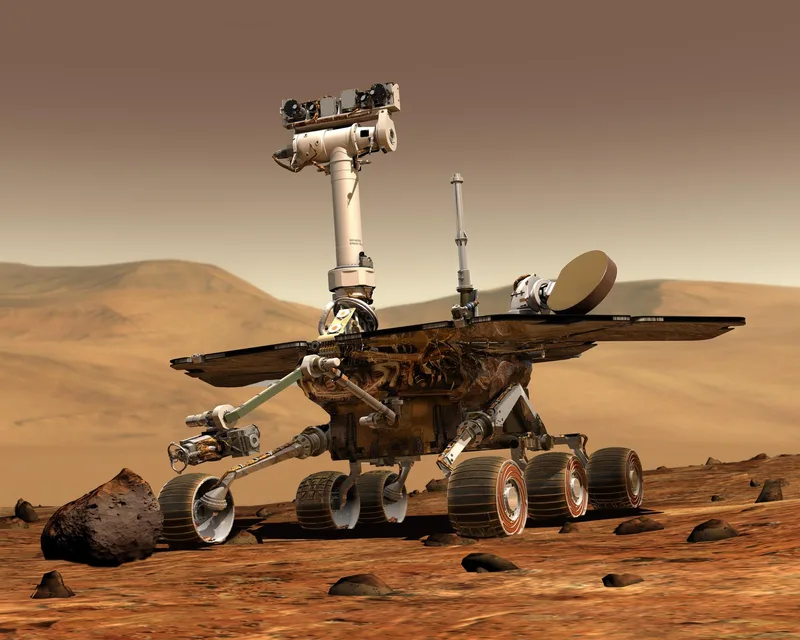
Artist Concept of Rover on Mars
An artist concept portrays a NASA Mars Exploration Rover on the surface of Mars. Two rovers were launched in 2003 and arrived at sites on Mars in January 2004.
View link
Q
QueekSpace Lens

Thom Yorke Live at Sydney Opera House - Official Trailer - In Cinemas March 2026
An unmissable, career-spanning concert film from the Radiohead frontman. Filmed under the stars against the iconic backdrop of the Sydney Opera House, this c...
View link
Q
QueekSpace Lens